
TLDR
The British Museum is free, enormous, and holds the Rosetta Stone, the Parthenon Marbles and some of the finest Egyptian mummies outside Cairo. Allow 3 hours for the highlights, arrive at 10am opening, and pick your route before you go in.
Insider Tip
Go on a Friday evening. The museum stays open until 8:30pm, the tour group buses have left, the Great Court is lit through the glass roof, and the Egyptian galleries are almost empty between 6pm and 8pm.
Planning your stay? Check current rates at Europa House Hotel, 15 minutes from the British Museum by Tube.
A 272-Year-Old Museum That Is Still Free
The British Museum was founded in 1753, which makes it one of the oldest public museums in the world. The collection holds around 8 million objects covering roughly 2 million years of human history, from prehistoric hand-axes to 20th century protest posters. About 80,000 of those objects are on display in the galleries at any one time, which is already more than you can possibly take in on a single visit.
Entry to the permanent collection is free. You can walk in off Great Russell Street, pick up a map, and stay for as long as you like. Temporary exhibitions (there are usually two or three running at any one time, often the headline one in the old Reading Room) are ticketed and need to be booked in advance, with prices in the £15 to £25 range for adults. Most visitors come for the free permanent collection, which is what this guide concentrates on.
The realistic planning assumption is 3 hours for the highlights (Rosetta Stone, Parthenon Marbles, Egyptian galleries, Sutton Hoo), or a full day if you want to go slower and cover more ground. Do not try to see everything in one visit. Even local members who hold annual memberships rarely manage that. Pick your priorities, do them properly, and come back another day if you have it.
The Great Court and Orientation
When you walk through the main entrance on Great Russell Street in WC1, you enter the Great Court. Designed by Norman Foster and opened in 2000, it is the largest covered public square in Europe, with a glass and steel roof spanning the old open courtyard at the heart of the museum. The Reading Room (where Karl Marx wrote most of Das Kapital) sits in the centre. The Great Court has the main information desks, two cafés, a restaurant, and a large bookshop.
Pick up a paper map from the information desk, or use the free British Museum app. The building is confusing. It has four floors in some wings and three in others, and the gallery numbering is not consecutive. Decide before you start walking whether you are going Ground Floor West (Rosetta Stone, Parthenon Marbles, Egyptian sculpture) or Upper Floor Main (Egyptian mummies, Sutton Hoo, Lewis Chessmen). If you try to mix them up without a plan, you will walk five extra miles.
Cloakrooms are to the left of the Great Court. Bags larger than 40cm by 40cm have to be left there, at a small fee. Security screening on the way in typically adds 5 to 10 minutes on a busy morning. Arrive at 10am opening and you skip the worst of it.
The Rosetta Stone and Egyptian Sculpture (Room 4)
The Rosetta Stone lives in Room 4, on the ground floor, a short walk west of the Great Court. It is the most famous object in the museum and there is almost always a crowd around it. The stone itself is a granodiorite stele from 196 BC, carved with the same decree in three scripts (Egyptian hieroglyphics, Demotic and ancient Greek), and it was the key that let Champollion crack the Egyptian hieroglyphic system in 1822. It is smaller than photographs make it look, about a metre tall, dark grey, and covered in extremely fine lettering.
Room 4 also holds the Egyptian monumental sculpture gallery, which is one of the most atmospheric rooms in the museum. The colossal granite head of Ramesses II, the pharaoh who inspired Shelley’s sonnet Ozymandias, sits in the middle of the room. Next to it are the lion-bodied statue of Amenhotep III, huge fragments of temple walls, and sarcophagi from the Valley of the Kings. Standing next to a 3,300-year-old stone head the size of a small car is one of the genuine highlights of a London trip.
The Parthenon Marbles (Room 18)
The Parthenon sculptures, widely known as the Elgin Marbles, occupy Room 18 on the ground floor. These are the original marble sculptures made around 440 BC for the Parthenon on the Athens Acropolis, depicting the Panathenaic procession, battles between gods and giants, and scenes from Greek mythology. They were removed from Athens by Thomas Bruce, the 7th Earl of Elgin, in the early 1800s, and bought by the British government in 1816.
Their continued presence in London is one of the longest-running disputes in the museum world. Greece has been formally asking for their return for decades, and the argument is live. Whatever view you take on the politics, the sculpture itself is extraordinary. The Duveen Gallery is purpose-built to display the frieze at eye level, well-lit, and the detail of the horses and riders is closer to life than almost any other ancient sculpture. Allow 30 minutes to walk slowly around the room.
Egyptian Mummies and the Upper Floor (Rooms 62 and 63)
The Egyptian mummies are on the upper floor in Rooms 62 and 63. This is usually the most crowded part of the museum because it is what most visiting school groups come to see. The rooms are genuinely excellent: human mummies, animal mummies, painted coffins, canopic jars, shabti figurines, papyri, and grave goods, all arranged to explain ancient Egyptian beliefs about death and the afterlife. The mummy of Katebet (Room 63) is displayed with the objects buried alongside her and is the single most informative exhibit in the galleries.
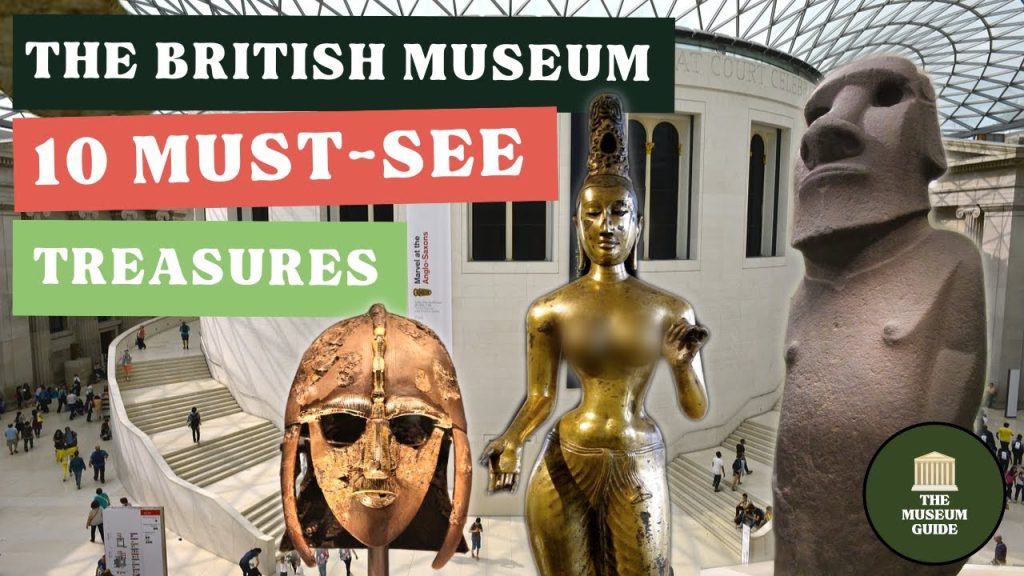
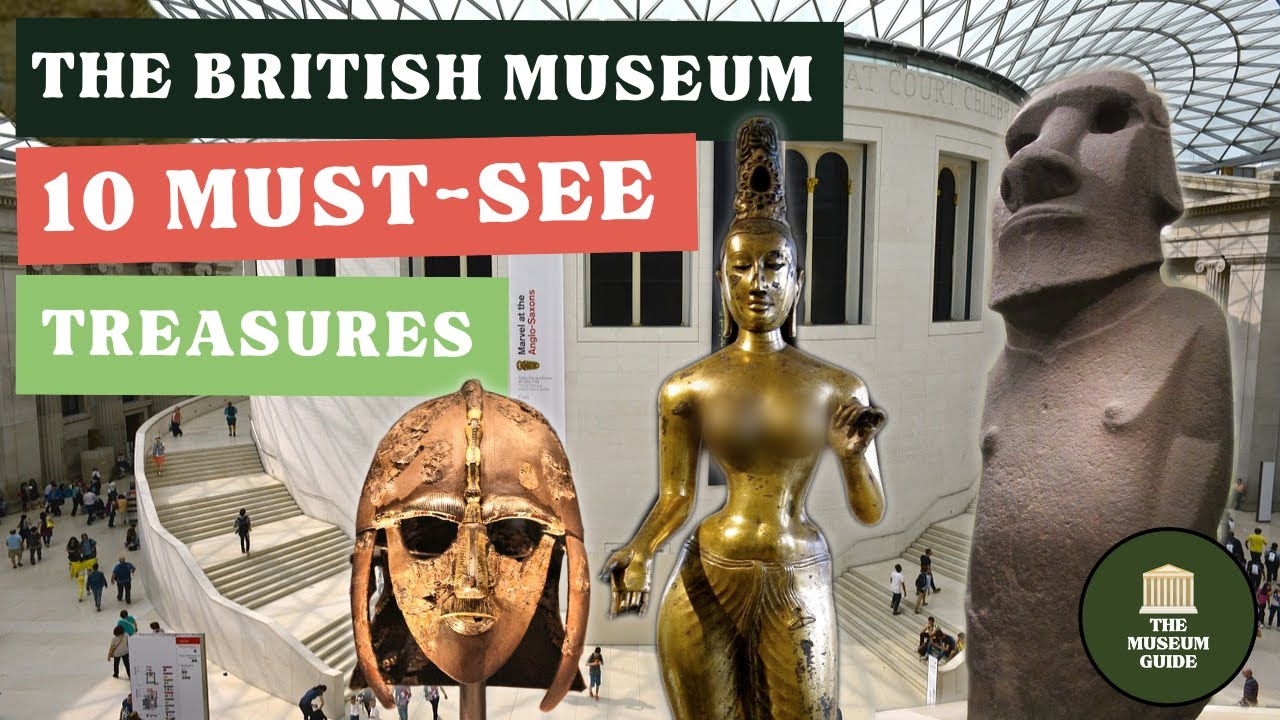
Room 41 contains the Sutton Hoo treasure, including the famous Anglo-Saxon helmet that is instantly recognisable from every British history textbook. The helmet was excavated from a 7th century ship burial in Suffolk in 1939, and it sits in its case alongside the gold buckle, garnet-inlaid shoulder clasps, and the great silver dish from the same burial. The Lewis Chessmen in Room 40 (12th century walrus ivory chess pieces from the Isle of Lewis) are a few steps away. Both rooms usually have shorter queues than the Egyptian galleries.
The Mildenhall Treasure in Room 49 (a hoard of late Roman silver ploughed up in Suffolk in 1942) is the museum’s quietly great secret. The Great Dish, 60cm across and covered in mythological scenes, is one of the most accomplished pieces of Roman silver anywhere in the world, and you can usually see it with no-one else in the room. If you have been through the big-name galleries and want something less crowded, head for Room 49.
Getting There, Hours and Practical Tips
The British Museum is at Great Russell Street, London WC1B 3DG, in Bloomsbury. The nearest Tube stations are Tottenham Court Road (Central, Northern and Elizabeth lines), which is a 5 minute walk to the south entrance, and Russell Square (Piccadilly line), a 5 minute walk north. Holborn on the Central line is also a 7 minute walk. From Europa House Hotel near Paddington, take the Circle line east to King’s Cross and change to the Piccadilly line for Russell Square, or take the Bakerloo line to Oxford Circus and walk the 15 minutes along New Oxford Street. Total journey time is around 25 minutes. For live route updates, TfL is more reliable than Google Maps on the day.
Opening hours are 10am to 5pm every day, with a late opening on Fridays until 8:30pm. The museum is closed on 24, 25 and 26 December and 1 January. Entry to the permanent collection is free and no booking is required, though you can reserve a free timed entry slot if you want to skip the queue on a busy day. Temporary exhibition tickets should be booked ahead on the museum website.
For food, the Court Restaurant in the Great Court is fine but pricey at around £25 for a main. The cafés in the Great Court do sandwiches and cake for less. Better value is to walk two minutes out onto Museum Street or Coptic Street where there are independent sandwich shops, coffee places and a couple of good pubs. Exiting the museum for lunch and coming back in later is allowed and recommended. For more on where to eat around Bloomsbury, see the restaurant guide. For a wider Bloomsbury day that combines the museum with bookshops and Russell Square, the neighbourhood guide covers it.
You might also find these useful: Things to Do in London: A Local’s Guide, Tower of London: Full Visitor Guide, London on a Budget.
What Guests Say About Staying in London
Guests rate it 7.4/10 on Booking.com from 766 reviews.
I really enjoyed my stay here. The location is excellent, just a short walk from Paddington Station and only 30 minutes from Heathrow, which is very convenient. The room was spotless, cozy, and beautifully maintained. The staff were incredibly friendly and helpful, always ready to assist with a smile.
What Guests Say About Staying Here
Guests rate it 7.4/10 on Booking.com from 766 reviews.
Great hotel for solo traveler wanting to save money on a room. Location is perfect. Less than 5 minutes to walk to Paddington Underground Station and Elizabeth Line which goes to airport. Friendly staff and very quiet location.
See What Europa House Hotel Looks Like

Check current prices at Europa House Hotel
Europa House Hotel in London, a short Tube ride to Russell Square and the British Museum.
Check Available RoomsWe may earn a small commission if you book through this link. It does not cost you anything extra.
Frequently Asked Questions
Is the British Museum free?
Yes, entry to the British Museum is free for everyone, every day. Some special exhibitions cost £16-22 and require booked tickets. Donations of £5 per visitor are suggested but not required.
What are the opening hours of the British Museum?
The museum is open daily 10am-5pm, with extended Friday hours until 8:30pm. Last entry is 45 minutes before closing. It closes on 24, 25, and 26 December and 1 January.
How do I get to the British Museum?
The nearest Tube is Tottenham Court Road (Central, Northern, Elizabeth lines), a 3-minute walk. Holborn (Central, Piccadilly) and Russell Square (Piccadilly) are both 7-minute walks. From Paddington, the Elizabeth Line reaches Tottenham Court Road in 7 minutes.
What should I see in a short visit?
For 2 hours, head to the Rosetta Stone in Room 4, the Parthenon Marbles in Room 18, the Egyptian mummies in Rooms 62-63, and the Sutton Hoo treasures in Room 41. Pick up a free museum map at the entrance to plot an efficient route.
Do I need to book British Museum tickets?
General entry is free and usually walk-up, though booking a free timed slot online guarantees faster entry at peak times (weekends and school holidays). Special exhibitions require a separate paid booking. Allow 15-20 minutes for security checks on Saturdays.
How long should I spend at the British Museum?
Most visitors spend 2-4 hours. Dedicated history fans can easily fill a full day, as the museum has around 8 million objects across 60 galleries. Break up the visit with lunch at the Great Court Restaurant or Pizza Express next door.
Is the British Museum suitable for children?
Yes, especially for ages 7 and up. The Egyptian, Greek, and Roman galleries are immediate crowd-pleasers. Free family backpacks and activity trails are available from the Families Desk in the Great Court on weekends and school holidays.
What are the best tours at the British Museum?
Free 30-minute Eye Opener tours run daily in specific galleries, no booking required. The 90-minute highlights tour costs £18 and covers 12 major objects across 3 floors. Audio guides cost £7 and cover 250 objects.
Planning a Stay in London?
Guests rate Europa House Hotel 7.4/10 on Booking.com from 766 reviews. Check prices and availability for Europa House Hotel on Booking.com, or compare other places to stay nearby.
Check AvailabilityWe may earn a small commission if you book through this link. It does not cost you anything extra.
Staying at Europa House Hotel? Browse rooms, facilities and more local guides.
Back to Europa House Hotel