
TLDR
The best time to visit London depends on what you’re after. Shoulder seasons (just before and after peak tourist months) typically offer the best balance of good weather, fewer crowds, and lower prices. This guide breaks it down month by month.
Insider Tip
Booking Europa House Hotel in the shoulder season can save you 20-40% compared to peak rates. Same room, same experience, fewer crowds.
Planning your stay? Check current rates at Europa House Hotel, a convenient base for exploring London.
Peak Season
Peak season brings the best weather but also the highest prices and biggest crowds. Book accommodation and popular attractions well in advance. Europa House Hotel fills up quickly during this period.
Shoulder Season
The sweet spot for most travellers. Weather is still good, prices drop, and you can actually get a table at popular restaurants without a reservation. This is when most experienced travellers visit London.
What Guests Say About Staying in London
Guests rate it 7.4/10 on Booking.com from 766 reviews.
I really enjoyed my stay here. The location is excellent, just a short walk from Paddington Station and only 30 minutes from Heathrow, which is very convenient. The room was spotless, cozy, and beautifully maintained. The staff were incredibly friendly and helpful, always ready to assist with a smile.
What Guests Say About Staying Here
Guests rate it 7.4/10 on Booking.com from 766 reviews.
Great hotel for solo traveler wanting to save money on a room. Location is perfect. Less than 5 minutes to walk to Paddington Underground Station and Elizabeth Line which goes to airport. Friendly staff and very quiet location.
See What Europa House Hotel Looks Like

Check current prices at Europa House Hotel
Europa House Hotel in London, a solid base for exploring everything on this list.
Check Available RoomsWe may earn a small commission if you book through this link. It doesn’t cost you anything extra.
Off Season
Lower prices and empty streets, but weather can be unpredictable. Some attractions may have reduced hours. If you don’t mind a bit of rain or cold, this is when London feels most authentic.
Month-by-Month Quick Guide
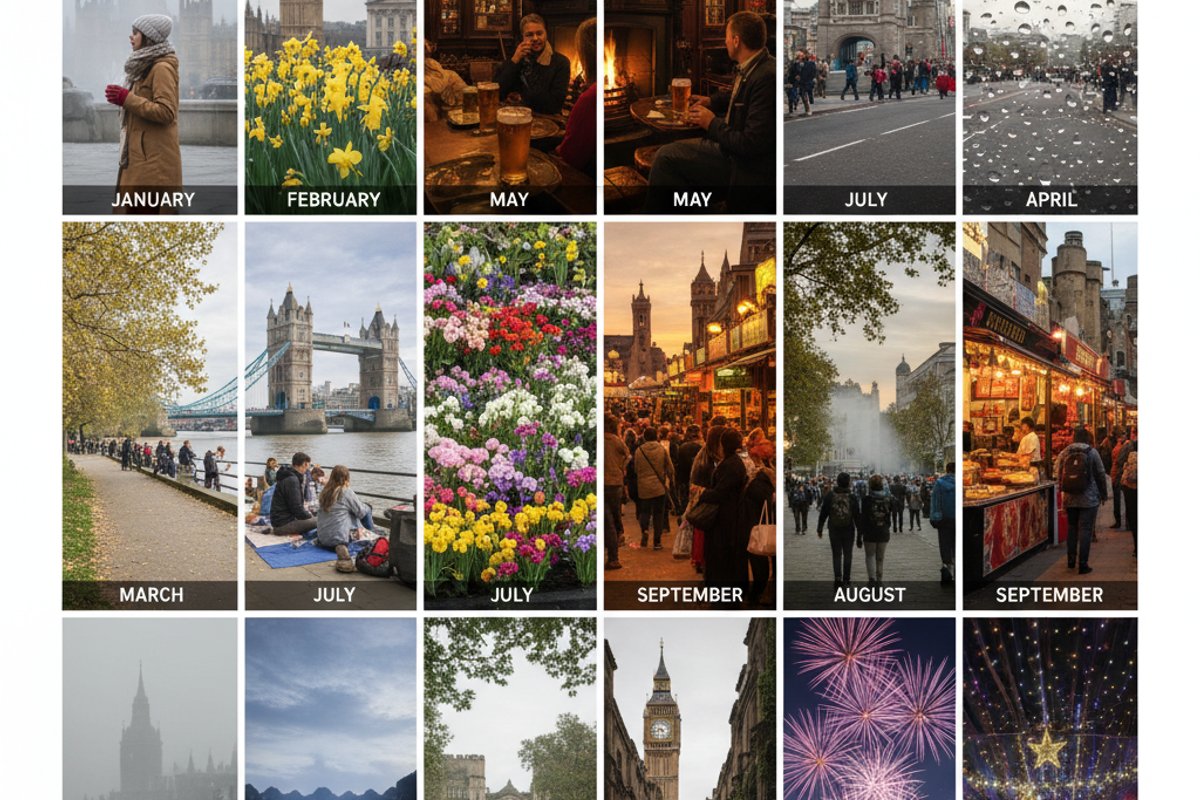
January-March: Check seasonal conditions for London. Can be quieter and cheaper.
April-June: Often ideal conditions. Book early if visiting during holidays.
July-September: Peak summer period in many destinations. Expect crowds and higher prices.
October-December: Shoulder into off-season. Often excellent value with mild weather.
What London’s Weather Actually Does
The reputation London has for constant rain is half true. It does rain, but not in the tropical-monsoon way tourists expect. You’ll get five to ten wet days most months, usually light showers lasting an hour, not a full-day downpour. June through August sits at 18 to 24°C most days, with the occasional heatwave pushing 30°C (rare, usually three or four days a year). Winters are mild rather than freezing, 4 to 9°C being the typical range in December and January, with actual snow a once-a-year novelty that shuts the city down for twelve hours and then melts.
What matters more than the temperature is the daylight. In December you get sunrise around 8am and sunset just after 3.45pm, which means late afternoon sightseeing is essentially a night walk. In June it’s daylight from 4.45am to past 9.30pm, so you can eat dinner at 8pm and still walk through Hyde Park in full sun afterwards. Spring and autumn are the gamble months: April can give you a t-shirt day followed by sleet, October might be golden leaves in Hyde Park or wind-blown drizzle. Pack layers in any season, and a small brolly from April through October. For the current forecast-adjacent context, Visit London keeps a running seasonal guide that’s more use than generic weather sites.
One practical note on climate: the London Underground runs hot in summer. Carriages on the Bakerloo, Central and Piccadilly lines hit 30°C plus in July and August because the tunnels never cool down. The Elizabeth line and Circle line carriages are air conditioned, so if you have a choice of route on a heatwave day, take those. From Paddington you can reach most central destinations on the Circle or Elizabeth, which is a minor but real comfort advantage of staying on the Paddington side of town rather than, say, Camden on the Northern line.
When Prices Move and Why
Hotel rates in London follow predictable patterns. Peak pricing runs from late June through August and again from mid-November to New Year’s Eve, when Christmas markets and the Winter Wonderland in Hyde Park pull in the crowds. Expect a three-star room in Paddington to run £140 to £180 in peak, and the same room £95 to £130 in shoulder months (mid-March to mid-June, September to early November). January and February, excluding the week around 2 January when the post-Christmas sales happen, are the cheapest weeks of the year in London. If budget matters, that’s the window.
Flights into Heathrow and Gatwick track the same curve but with sharper spikes around school holidays (mid-February, Easter, late May, mid-July to early September, late October, Christmas week). The UK school calendar matters because domestic leisure travellers flood London during these weeks, which pushes both hotel and restaurant demand up. A booking made eight weeks ahead for a peak week can cost 30 to 40 percent more than the same booking made twelve weeks ahead, so the early-bird discipline pays for itself. For comparison shopping, budget guide covers the fare tricks that work and the ones marketed to death that don’t.
Restaurants and theatre are less seasonal but more event-driven. Wimbledon (late June to early July), the Chelsea Flower Show (May), and the major marathons (April) push up demand in specific neighbourhoods. West End theatre is cheaper in January and February and on Tuesday to Thursday nights year-round. Afternoon tea at Claridge’s at £75 or Fortnum & Mason at £65 books out six to eight weeks ahead in peak, two to three weeks in shoulder, and sometimes same-day in January. If there’s a specific restaurant or show you want, lock it in early and book the flexible stuff around it.
Seasonal Highlights Worth Planning Around
Spring in London is when the parks come into their own. The cherry blossom at Greenwich Park (late March to early April) and the tulip displays at St James’s Park (late April) draw crowds for good reason. Regent’s Park opens its rose garden in early June, and Hyde Park’s Italian Gardens near Lancaster Gate look best from late May. If you time it right, Kew Gardens in April has the magnolias and the Chelsea Physic Garden reopens to visitors. The downside of spring: the weather is genuinely unpredictable, so pack for two seasons in a day. Easter week is busy with family travel and attractions around the Tower of London get rammed.
Summer brings the festivals and the outdoor stuff. Trooping the Colour falls on the King’s official birthday in early to mid-June, Wimbledon runs late June through early July, and BST Hyde Park stages major concerts through July. Proms season at the Royal Albert Hall (July to mid-September) has last-night-of-the-Proms tickets going on sale in April and selling out within hours. Outdoor theatre at the Regent’s Park Open Air Theatre runs May to September, and rooftop bars on the South Bank come into their own when the temperature clears 20°C. The downside: Oxford Street and Westminster Abbey in late July genuinely shuffle with crowds, so start sights early or leave them for off-hours. For more on what to see once you’re there, the local’s guide covers which attractions handle crowds better than others.
Holidays, School Terms and the Real Crowd Calendar
UK school holiday dates decide when London feels full. February half-term (one week, mid-February) spikes attractions and hotels briefly. Easter holidays (two weeks around Easter Sunday) are the first big crunch of the year. May half-term (late May) is a shorter spike. The main summer holiday runs from mid-July to early September, which is the longest and busiest crowd period. October half-term (late October) and the Christmas holidays (late December through first week of January) round out the year. If you want quiet days at the Tower of London or the British Museum, the weeks immediately after half-terms and before the summer holidays (early September, mid-June, late September to mid-October) are your sweet spots.
Bank holidays in England matter too. New Year’s Day, Good Friday, Easter Monday, early May bank holiday, late May bank holiday, late August bank holiday, Christmas Day and Boxing Day. On these days most offices and many shops close, the Tube runs Sunday service, and all the outer London attractions (Kew Gardens, Hampton Court, Greenwich) get busy with locals. Central tourist sights stay open but with slightly reduced hours. Christmas Day and Boxing Day are the unusual ones where the Tube doesn’t run at all (Christmas Day) or runs a limited service (Boxing Day), so plan accordingly if your visit falls across those days.
One under-appreciated detail: London weather can sabotage or save specific attractions. Visiting Greenwich or the South Bank in proper rain is miserable because both are outdoor-heavy. Visiting the British Museum or the V&A in rain is fine because they’re covered. On wet days, shift your plans to indoor museums, department stores (Selfridges, Harrods) and theatre matinees. On rare perfect summer days, drop your museum plans and head to the parks, roof bars or open-air markets instead. The flexibility is what separates good trip planning from rigid trip planning. For the official tourist board calendar of events and openings, Visit London runs a month-by-month list that’s updated quarterly.
Autumn and winter have their own appeal if you know where to look. October colour in Hampstead Heath and Richmond Park is properly beautiful, and Bonfire Night (5 November) means free firework displays at Victoria Park, Alexandra Palace and Battersea. From mid-November, Christmas lights switch on along Regent Street, Oxford Street and Carnaby Street, Hyde Park Winter Wonderland opens, and the Somerset House ice rink runs through to mid-January. New Year’s Eve fireworks on the Thames are ticketed and sell out by October, so book early or watch from Primrose Hill instead (free, same view of the skyline). January and February are quiet, cold, but cheap, and that’s when locals suggest visiting if you prefer museums to outdoor markets. The royal events calendar is useful if you want to catch state occasions or ceremonial events.
You might also find these useful: Best Day Trips from London, Best Restaurants in London: Where to Eat, Getting to London: Airport and Transport Guide.
Frequently Asked Questions
When is the cheapest time to visit London?
January and February have the lowest hotel rates, often 30-40% below summer prices. Flights are cheaper too, and attractions like the Tower of London and Westminster Abbey have much shorter queues. Pack for cold, damp weather with highs around 8C.
What is London like in spring?
March to May brings daffodils and cherry blossom in Hyde Park and Kew Gardens, with temperatures climbing from 10C to 17C. The Chelsea Flower Show runs in late May and the London Marathon is in mid-April. Pack layers and a light waterproof as showers are common.
How hot does London get in summer?
Typical July and August highs sit around 23-25C, though heatwaves push into the low 30s a few days each year. Many older buildings including Tube trains on older lines do not have air conditioning, so carry water. Hyde Park, Regent’s Park, and Hampstead Heath are good spots to cool off.
Is autumn a good time to visit London?
September and October are some of the best months, with mild weather (15-20C), thinner crowds, and colour in the royal parks. Hotel rates dip in late September once school holidays end. Bring a warm jacket for evenings as it gets dark by 6pm in October.
What happens in London at Christmas?
Oxford Street and Regent Street light switch-ons happen in early November, and Winter Wonderland in Hyde Park runs from mid-November to early January (free entry, rides pay-per-go). Many attractions close on 25 December, including the Tube, but reopen on 26 December with reduced service.
Which month has the best weather for walking tours?
May, June, and September offer the best balance of long daylight, mild temperatures (17-22C), and lower rainfall. June has the longest days with sunset around 9:20pm. July and August are warmer but tourist crowds at the Tower, Westminster, and Buckingham Palace peak.
When does Buckingham Palace open to the public?
The State Rooms open for self-guided tours from late July to late September (£32 adult). This is the only time visitors can go inside, as the royal family is at Balmoral. Book online in advance as weekend slots sell out.
What should I avoid visiting in peak summer?
Outdoor queues at the Tower of London, London Eye, and Buckingham Palace can exceed 90 minutes in July and August. Book timed entry online and arrive at opening (9am or 10am). Tube rush hours (8-9:30am, 5-7pm) are hot and crowded, so plan museum visits mid-morning or mid-afternoon.
Planning a Stay in London?
Guests rate Europa House Hotel 7.4/10 on Booking.com from 766 reviews. Check prices and availability for Europa House Hotel on Booking.com, or compare other places to stay nearby.
Check AvailabilityWe may earn a small commission if you book through this link. It does not cost you anything extra.
Staying at Europa House Hotel? Browse rooms, facilities and more local guides.
Back to Europa House Hotel